Last year, biographies held my attention. I’m always eager to learn, but biographies are especially helpful when I find myself navigating the difficulties of life. Reading about other people’s lives and how they handled challenges and setbacks helps me feel less alone. This year was a tough one. The following books kept me company.
Astrid Lindgren: The Woman Behind Pippi Longstocking

I kicked off the year by reading about Astrid Lindgren, the author of Pippi Longstocking. This was partially research for an article I wrote for Women’s Barbell Club about the fun and feisty children’s book character, and it ended up being one of my favorite reads of the year. Astrid Lindgren’s story was unexpected: Raised in a Christian home, she found herself as a teenager impregnated by her boss who was married but claimed to be in love with her. She went away to a neighboring country to have the child and initially left him with a foster family, but when the foster family could no longer take care of him, she took him home. She eventually brought her son back to her family and challenged her parents to receive him as their grandson. In the time between, Astrid was very much on her own, providing for herself and her son without the help of a spouse or family.
I found this account especially meaningful in contrast with the story of Dorothy Sayers, a publicly Christian author who had a son outside of wedlock but never overcame that shame. She made sure he was taken care of, but his whole life she only made herself known to him as an aunt, not as his mother. The contrast between their stories is fascinating to me, because they ostensibly held similar values but struggled in different ways to live them out.
Fierce Ambition: The Life and Legend of War Correspondent Maddie Higgins

Maggie Higgins, born to a French mother and American father, worked her way up at the New York Herald Tribune with stubbornness and single mindedness. These same traits paved her way to Europe as an international correspondent near the end of World War Two and later, to Korea, where she did what was probably her best journalistic work. This book offers an encounter with a woman who was obsessed with reporting and could not be content to sit back in safety while her male colleagues got the scoop. She out-reported and out-scooped one after another.
Along with chronicling Higgins’ life and career, this book offers a mini course on the early days of the Cold War, as well as the Korean War and the Vietnam War, until Higgins’ early and untimely death in 1966. Accompanying history lessons are part of why I enjoy biographies like this so much: I can glean lessons from a person’s life while learning more about the history they lived through which shapes my own present context.
This Cold Heaven: Seven Seasons in Greenland
Gretel Ehrlich weaves together her own experiences among the people and places of Greenland with the arctic travels of 20th century explorers and a chronicling of the mythology and traditions of indigenous arctic people. This book is a deep dive into the landscape and cultures of the arctic — an excellent winter read.


Rembrandt Is in the Wind: Learning to Love Art through the Eyes of Faith
This contemplative read brought together the stories of classical artists, their work, and elements of the Christian faith. I had fairly low expectations for this book, because to be honest, Christian nonfiction tends to fall flat, but I enjoyed the writing and thought behind this book. Coincidentally, the author is a fellow Taylor University grad.
Desert Queen: The Extraordinary Life of Gertrude Bell
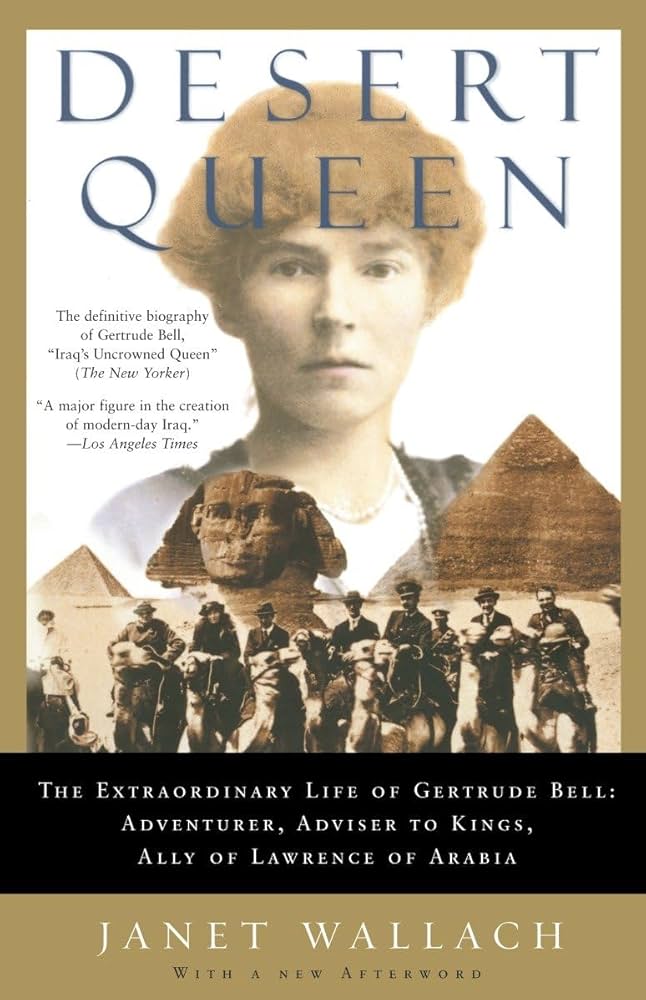
Gertrude Bell was a young, single, British woman exploring the Middle East while the Ottoman Empire was in the process of crumbling. Her native Britain had vested interests in the Middle East. Its navy had switched from coal — which could be mined at home — to being fueled by oil. Britain had no oil reserves of its own, so it relied on the Middle East to fuel its navy. As the Ottoman Empire crumbled and the European continent slid toward the First World War, Bell got to the know the people and tribes of modern-day Syria, Iraq and Iran. Her insights helped the British maintain some level of control in the region — for better or worse.
The Case Against the Sexual Revolution by Louise Perry

A much-needed look at what the sexual revolution has cost women. The content of this book is difficult to get through, because Perry writes frankly about sexual violence in its many forms, but this frankness is necessary to her argument. She systematically tears down the ideas that sex isn’t meaningful, consent makes anything okay, and women can approach sex in the laissez-faire way of the stereotypical man. This book is a well-written mic drop.
My main disappointment is that Perry relies heavily on evolutionary psychology and neglects the science that shows how sex supports chemical and emotional bonding between men and women. Her over-reliance on evolutionary psychology leads to a view of men that is largely pessimistic, and there isn’t much said about how sex without commitment hurts men too.
I would not recommend this book to everyone, because the content requires a mature reader, but Perry’s argument and ideas are worth engaging with.
The Editor: How Publishing Legend Judith Jones Shaped Culture in America
The editor of Julia Child, John Updike, and many others, who saved Anne Frank’s diary from the slush pile and transformed the American mind toward food: Judith Jones. This book was a beautifully written walk through her life. Highly recommend to any word or food lovers with a shred of curiosity.


A Circle of Quiet by Madeleine L’Engle
I loved this book and will be reading every other installment in the Crosswicks Journal series. L’Engle’s musings on life, God, writing, and creativity speak to my heart.
The Life and Death of the American Worker: The Immigrants Taking on America’s Largest Meatpacking Company
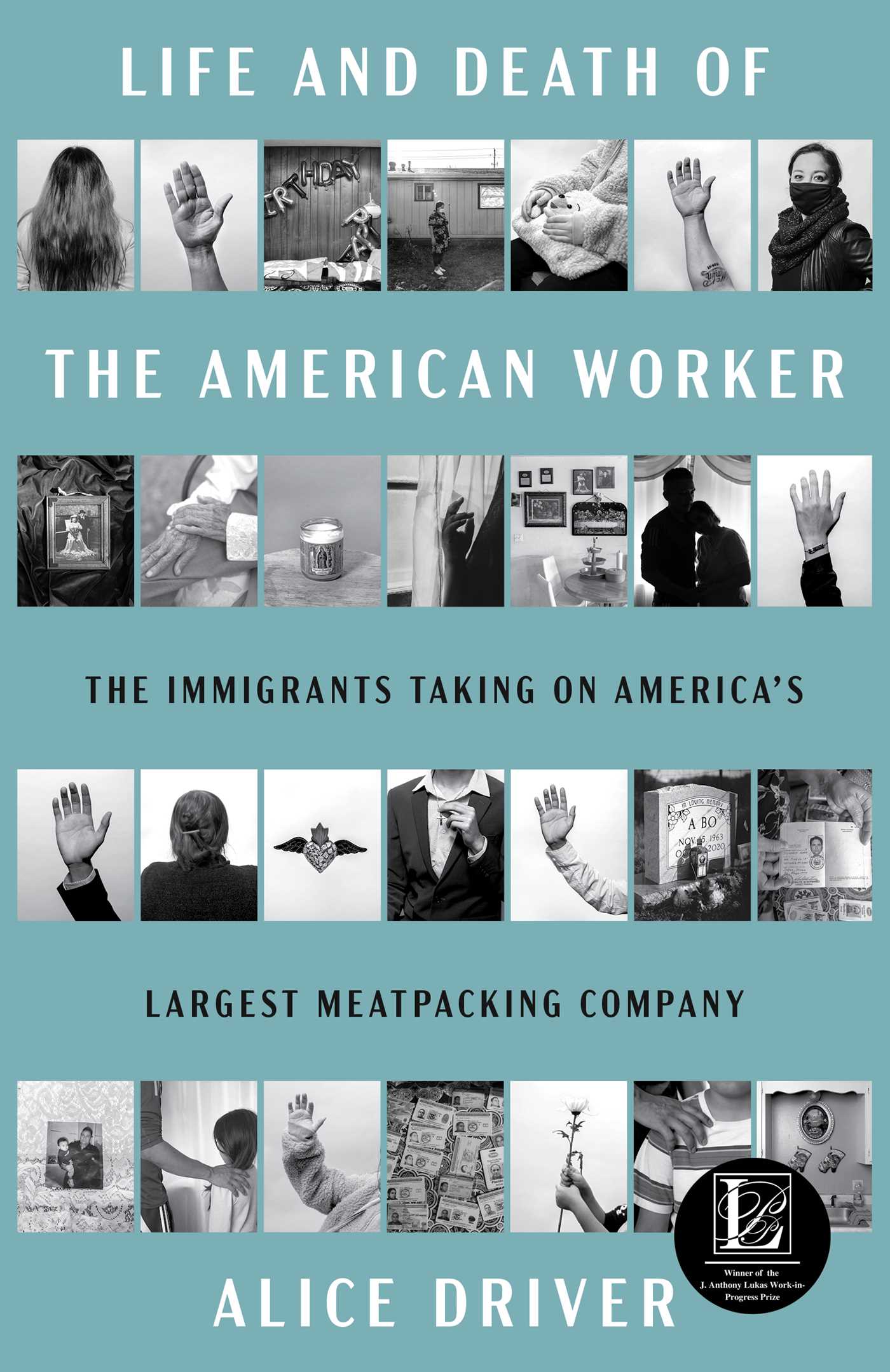
A must-read. If you are remotely interested in the food system and the conditions of meat-packing plants in the U.S., read this book. It follows the stories of immigrant workers at Tyson Foods in Arkansas, where the company holds outsized sway on politics and policies. The author traces Tyson’s history of getting its way with governors and presidents, including Bill Clinton, and provides an incisive look at the conditions of the company’s plants in Arkansas. Warning: You will never want chicken nuggets again.
Working conditions are the book’s main focus, with Part Two focusing on how conditions only got worse during the pandemic. This is brought to life by the stories of workers who suffered overuse injuries, chemical injuries, and the worst of COVID-19 as their employer lobbied the federal government to exclude the meat-packing industry from pandemic-time regulations.
The House of Mirth by Edith Wharton

This classic novel from the turn of the century tells the story of a young woman navigating New York society in the hopes of gaining a fortune that will set her up for the rest of life. At a time when the upper echelons of society eschewed work, when needing to labor for an income was viewed with shame especially for women, Miss Bart finds herself in need of a husband with the means to pay for her extravagant taste. The novel is a sharp examination of the costs that come with needing to maintain one’s status and treating others as a means to an end. I absolutely loved this book. Edith Wharton is my new favorite classic author, and this book had me on the edge of my seat through its final chapters.

 Meredith Sell
Leave a comment